Put the lotus seeds in a bowl and cover with hot water. Soak for about 1 hour or until they expand. Drain well, then remove the green or bitter core from each seed if present.
Boil the lotus seeds with 1 tsp alkaline water, also known as kansui for about 20 minutes. This helps chemically darken the lotus seeds.
After that, rinse the seeds very thoroughly with fresh water before continuing with the regular boiling process. It is important to rinse well so that there is no alkaline taste in the finished paste.
Boil the seeds in fresh water for about 45 minutes until very soft. Skim off any foam during cooking, then drain.
Blend the cooked lotus seeds into a very smooth puree, adding only a little water if needed.
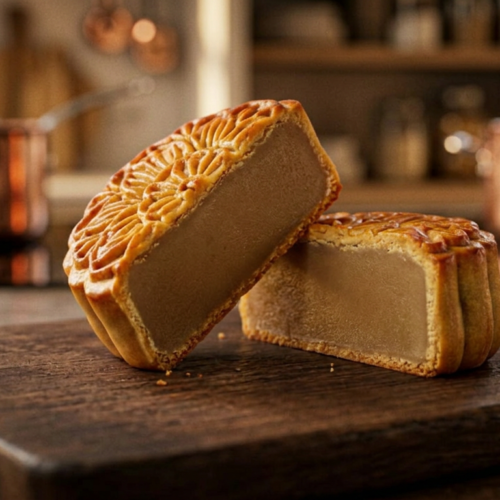
In a wide non-stick pan, melt 200 g sugar over low heat until it turns light to deep amber caramel. Be careful here, as caramel is very hot. Once it reaches a deep amber colour, immediately add in the lotus seed puree and stir well so the puree absorbs the caramel colour. Caramelising part of the sugar gives the paste a stronger brown tone and a richer flavour, which is a common bakery-style technique.
Then, add 1 Tbsp dark brown sugar and 1 Tbsp golden syrup to help deepen the colour and give a more polished, commercial looking finish. Stir over low heat until the mixture thickens and starts to come together.
Finally, add the vegetable oil gradually in three batches, stirring until each batch is fully absorbed before adding the next. Continue cooking over low heat until the paste is thick, smooth, glossy, and no longer sticks to the pan.
The paste is ready when it forms one mass, pulls away from the pan, and can hold its shape without looking wet. After cooling, it will firm up more, so stop cooking while it is still slightly softer than the final texture you want.
Transfer to a tray, let cool completely, then refrigerate before using as mooncake filling.